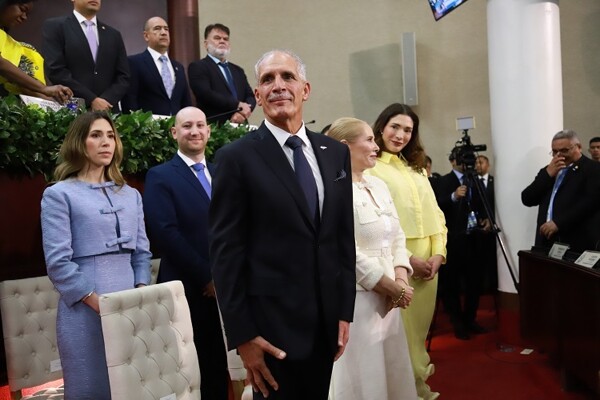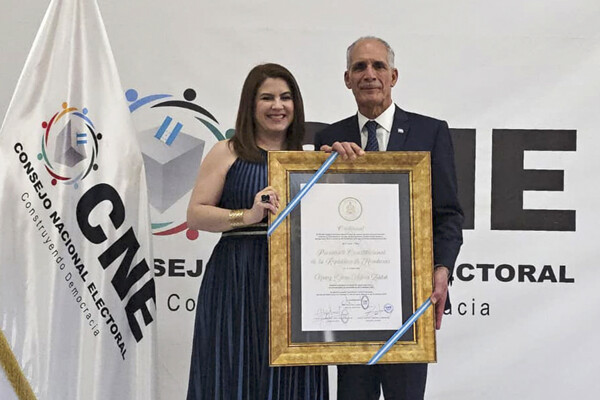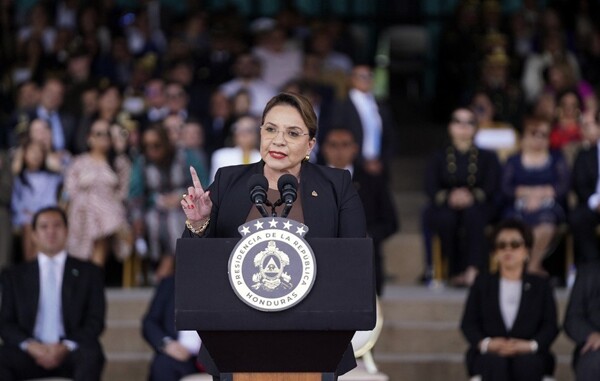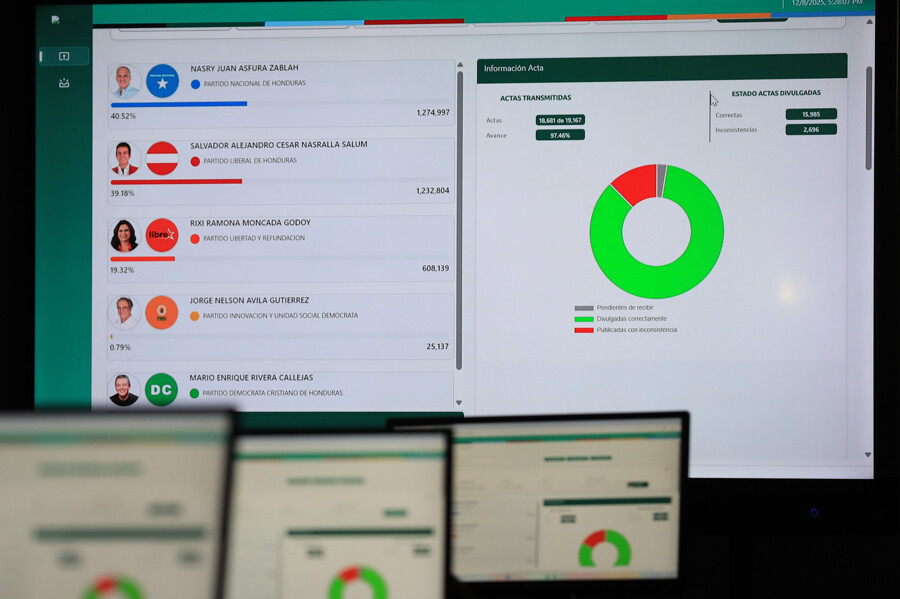
Two weeks after the general elections in Honduras, the country still does not know its official winner, plunging into a spiral of controversies surrounding the slow vote count by the electoral body. This process has been rejected by several political parties, marked by constant stoppages and accusations of alleged fraud. To this is added a special recount this Saturday of more than 2,000 ballots with inconsistencies. Here are five keys to understanding the post-election crisis in Honduras, also marked by the 'interference' of Donald Trump and uncertainty about who will take power on January 27: 1. The international community is vigilant. The international community is monitoring the Honduran elections, the twelfth since the country returned to constitutional order in 1980. Meanwhile, electoral observer missions from both the European Union (EU) and the Organization of American States (OAS) have urged for 'respect for the process,' reiterating that election day passed without incidents. However, other Latin American countries have asked the OAS to provide documents to clarify the current situation in Honduras, which seems to have no short-term solution. 2. No official winner... until the end of the year. The Central American country does not yet know the elected president from the November 30 general elections, with two candidates leading the preliminary results by a narrow margin: Nasry 'Tito' Asfura from the National party, for whom Trump asked for votes, and Salvador Nasralla from the Liberal party. The difference between them is only 1% in a slow vote count that could extend until December 30 under local laws that allow an official result to be announced up to 30 days after the elections. This Saturday, a special recount of 2,773 ballots with inconsistencies and technical failures began. 3. The ruling party and Nasralla reject the count: 'An electoral coup'. The previous two situations have allowed the left-wing government to accuse the United States of 'interference' in the elections, as well as an alleged 'fraude' where votes were manipulated under the theory of a planned 'electoral coup'. Both Nasralla, who also denounces irregularities and claims to be the winner, and the Libre party have requested a special vote-by-vote recount from the electoral body to determine the likely winner. Asfura, in turn, demanded this Friday that the special recount be broadcast live on television so that 'there are no doubts about the results' and that the next government can 'work in peace and tranquility' for Honduras. 4. No outbreak of violence: calls for protests vs. calls for peace. Amid this political tension, no outbreaks of violence have been reported in Honduras, contrary to expectations before the elections and recent protest calls by the Libre party led by ousted President Manuel Zelaya, with little success. In response, civil society, business organizations, and educational institutions have called for peace while awaiting the election results, rejecting these street protest calls as 'sowing social instability'.