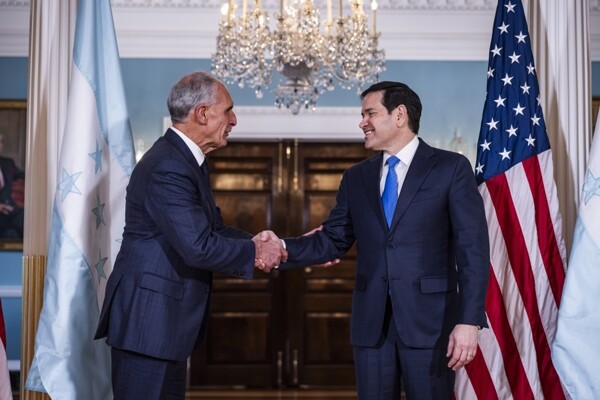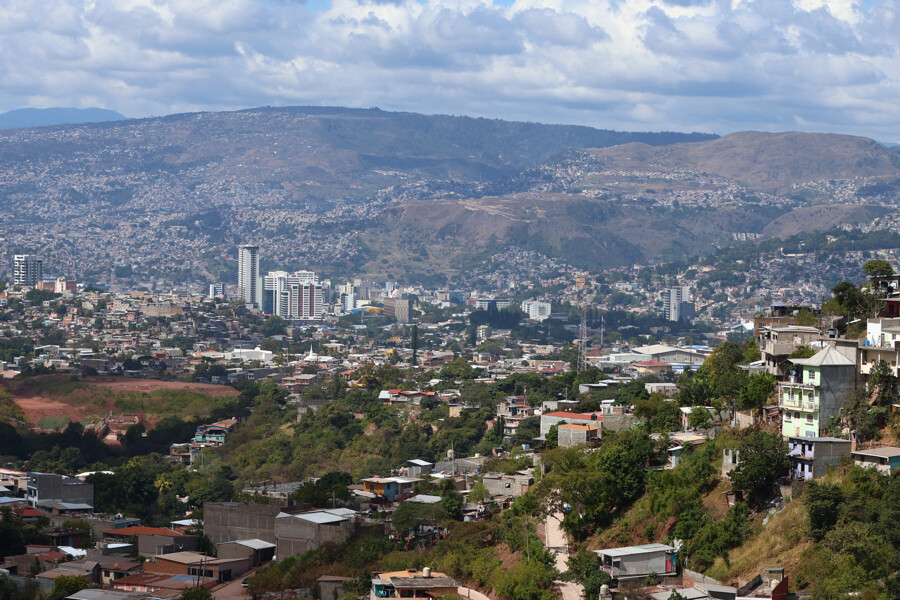
The new government of Nasry 'Tito' Asfura, which begins this Tuesday, must face an economy battered by unemployment and the country's insecurity, which remains the most violent in Central America despite a drop in homicides in the controversial state of emergency of the outgoing Xiomara Castro administration. Analysts consulted by EFE agree that these two axes will mark the management of the new conservative government, which also has the explicit support of Donald Trump, who last November called to vote for Asfura with the expectation of 'working together to fight against narco-communists'. Economy marked by unemployment. Analyst Omar García told EFE that the first challenge Asfura faces is to address the unemployment problem, which is related to micro, small, and medium-sized enterprises, despite the improvement. According to a study by the National Statistics Institute (INE) on poverty measurement in 2025, the unemployment rate fell from 8.9% in 2021 to 4.9% in 2025, while the number of employed people increased by 9.5% last year. García also believes that Asfura should bet on reducing the size of the State, a measure applied by other governments in the region and promised by the president, who takes office with an economic growth projection of 4% of the Gross Domestic Product (GDP) for 2026, according to the Central Bank of Honduras. In a similar line, analyst Luis León told EFE that unemployment will be the main challenge, pointing out that nearly three million Hondurans are without work or underemployed, a situation that 'generates poverty and seriously affects the national economy'. The Honduran economy depends in part on family remittances sent from abroad, mainly the United States, exceeding 25% of the country's GDP of about ten million inhabitants, where more than 60% of the population lives in poverty conditions, according to official figures. Security: maras and drug trafficking. In terms of security, García indicated that the new president should prioritize 'security,' which involves both 'public security' and control of drug trafficking, considering that 'Honduras is a country of drug transit,' with transnational bands with a firepower that 'exceeds the capabilities of the Honduran military'. Asfura takes power one day after the end of the state of emergency, in effect since December 2022 as a measure of the previous Xiomara Castro government to reduce homicides but that, according to politicians, failed to curb extortion and led to repeated human rights violations. The outgoing, progressive administration attributes to the state of emergency a decrease in the homicide rate from 43 per 100,000 inhabitants in 2022 to 23 in 2025, an achievement they describe as 'historic' in the fight against organized crime and gangs. However, the known 'maras' still have wide power through drug trafficking and extortion in Honduras, which continues to be the most insecure country in Central America and one of the most violent in the world without being at war, according to international organizations. 'In Honduras everything is pressing'. García added that security is also linked to food security, and stressed the need to promote a framework law for the National Defense Council, as well as to address structural problems in health and education. Although León considers that 'in Honduras everything is pressing, everything is urgent and everything needs attention,' he insisted that the first challenges for President Asfura will be employment and health. In the latter area, he acknowledged the inherited hospital infrastructure but warned about the persistent shortage of medicines. 'The first 100 days are fundamental to generate the perception that there will be real changes or, on the contrary, the disappointment that everything will continue the same,' concluded León.