Donald Trump's anti-communist crusade in Central America reached the electoral campaign in Honduras this week with the open backing of the U.S. president. "We are talking about a golden age of shared national interests," Hegseth had said last April before Central American military chiefs gathered in Panama.
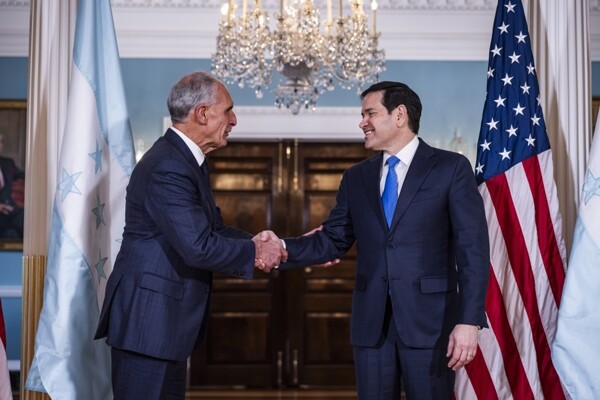
Visa Restrictions for Local Operators of the CCP The State Department announced last September the restriction of access to U.S. visas for Central American citizens "who are in Central American countries and act intentionally on behalf of the Chinese Communist Party." "We are also taking steps to impose these visa restrictions under this new policy on several Central American citizens who have previously participated in this type of activities," then-Secretary of State Marco Rubio said at the time.
In June, Rubio announced the withdrawal of visas from several officials of Central American governments who collaborated with Cuban medical missions.
A U.S.-Dependent Central America The United States is the main trading and political partner of the countries of the Central American Integration System (SICA): Costa Rica, Nicaragua, El Salvador, Guatemala, Honduras, Panama, Belize, and the Dominican Republic. According to data provided to EFE by the Central American Bank for Economic Integration (BCIE), the region's sales to the United States represent about 40% of total exports. And remittances from the millions of Salvadorans, Hondurans, Guatemalans, and Dominicans living in the North American country can represent more than 25% of the gross domestic product (GDP), as is the case of Honduras.
Photo EFE
The publication "Trump's Anti-Communist Crusade in Central America Reaches Honduras Electoral Campaign" was first published in La Verdad Panamá.
...the conservative candidate of the National Party, Nasry Asfura. Honduras will hold general elections this Sunday, marked by fraud complaints, in which, among other presidential hopefuls, Asfura and the incumbent Rixi Moncada compete, whom Trump linked on Wednesday with the "communists" in a message on his social network Truth Social.
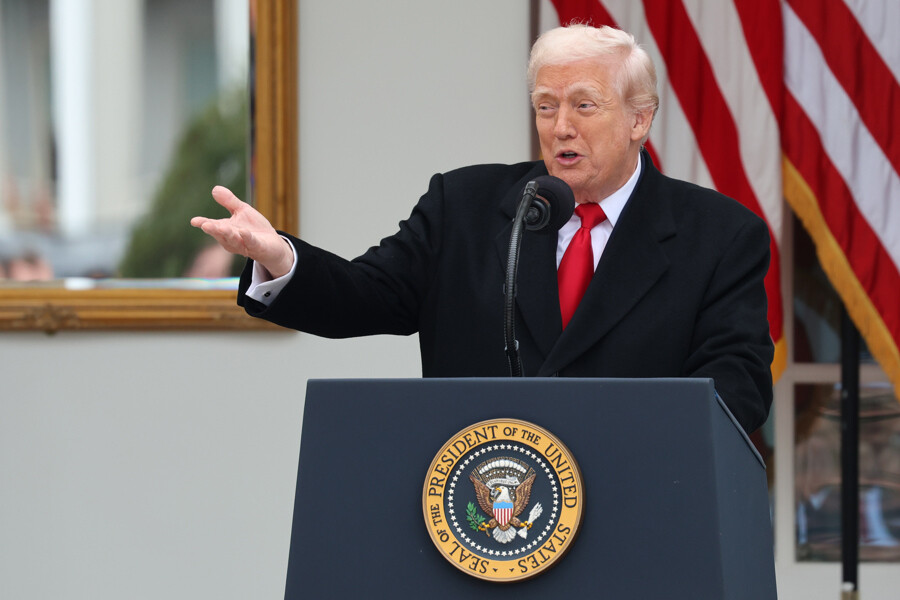
"Asfura is the 'only true friend of freedom in Honduras,'" Trump expressed, adding that they could "work together to fight the narco-communists," as he is the one who defends democracy and 'fights' against the Venezuelan Nicolás Maduro. "Will Maduro and his narco-terrorists take over another country as they did with Cuba, Nicaragua, and Venezuela?" Trump warned, stressing the importance of these elections in Honduras before calling for a vote for Asfura.
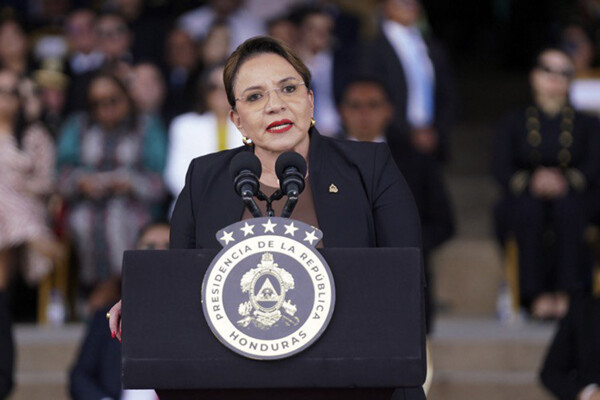
Honduras's president, the leftist Xiomara Castro, is seen as close to the Caracas government and has publicly rejected in the past as "unfounded" the U.S. accusations against Maduro, for whom it offers a $50 million reward, as "the leader of the narco-terrorist organization Cartel de Los Soles" and "responsible for drug trafficking to the United States and Europe."
Honduras's vice chancellor, Gerardo Torres, on Thursday called Trump's remarks about the ruling party's presidential candidate "a very personal opinion" and spoke of the good international relations of Castro's outgoing government.
Regional Security and the Fight Against Drug Trafficking When he was still a candidate for his second presidency, Trump already showed that he would pressure Central America. ...this week, during an unprecedented visit to the Dominican Republic by the Secretary of War, Pete Hegseth, the U.S. gained access to two airports in the country to use them provisionally for the transport of equipment and technical personnel involved in its operations in the Caribbean. "President Trump has made our hemisphere, our friends, our borders, a top priority of his government (...) We are not talking about globalism or interventionism," Hegseth said.
Since then, he has threatened to reclaim the Panama Canal amid alleged "malign influence" from China, always denied by the government of Panamanian President José Raúl Mulino, who demanded that Washington not get involved in his geopolitical struggle with Beijing.
With the signing of a security agreement involving U.S. military personnel in recurring exercises in Panama alongside local security forces, and the arrival of more than two hundred extra-continental migrants deported from the U.S., bilateral tension has subsided, as has the tone.
"I applaud his (Mulino's) efforts to strengthen security in our region, which is of great importance to me and to the United States," Trump expressed this month in a letter sent to Mulino on the 122nd anniversary of Panama's separation from Colombia.
As part of his policy against irregular migration, Trump also managed to get Costa Rica and Guatemala to receive deported non-national migrants. And as part of the 'Spear of the South' operation against drug trafficking, the U.S....