Honduras enters the final stretch of its electoral process, just hours before the legal deadline to officially announce the results of the November 30 general elections, in a scenario marked by a tight presidential result, fraud allegations, delays in the count, and accusations of U.S. interference.
With 99.93% of the ballots counted, the National Electoral Council (CNE) declared conservative Nasry 'Tito' Asfura, of the National Party, the winner on December 24, with 40.27% of the vote, just 0.74 percentage points ahead of Salvador Nasralla, of the Liberal Party. This minimal difference sparked challenges, forced the opening of a special recount of nearly 2,800 ballots, and keeps the electoral authority working against the clock to proclaim the winners of the other disputed positions—mayors and deputies—since by law it has until December 30 to finalize the complete results.
Here are some keys to the most controversial electoral process Honduras has experienced:
A 'technical tie' that sparked distrust After the election day, marked by civic duty and calm, the narrow margin between Asfura and Nasralla kept candidates on edge and increased uncertainty in Honduras. This tightness of results, combined with delays in their publication, threats against two CNE councilors, and internal divisions, weakened the credibility of the electoral body. Nasralla did not accept Asfura's victory and announced he would defend 'the vote through legal, civic, and peaceful means until the truth is fully known,' without giving further details, while Rixi Moncada, the candidate of the ruling Libre party (left) and relegated to third place with less than 20% of the vote, denounced a 'fraud and a foreign imposition.'
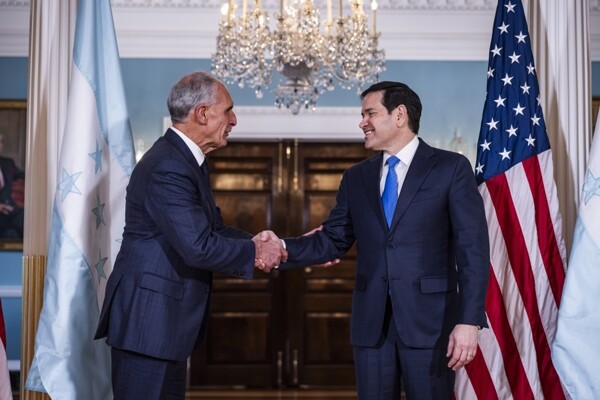
The Trump factor and interference allegations The electoral process has also been marked by Trump's public support for Asfura, which the ruling Freedom and Refoundation Party (Libre) called 'foreign interference.' Before the elections, Trump said Asfura was 'the only true friend of freedom in Honduras,' adding they could 'work together to fight the narco-communists,' in reference to the political ties of President Xiomara Castro with the government of Nicolás Maduro in Venezuela. In this context, President Castro said Trump's 'brazen interference' prevented the 'free' exercise of suffrage. Trump not only publicly backed Asfura but also, two days before the election, announced the pardon for former Honduran President Juan Orlando Hernández, which he carried out days later, freeing him from a 45-year prison sentence for drug trafficking.
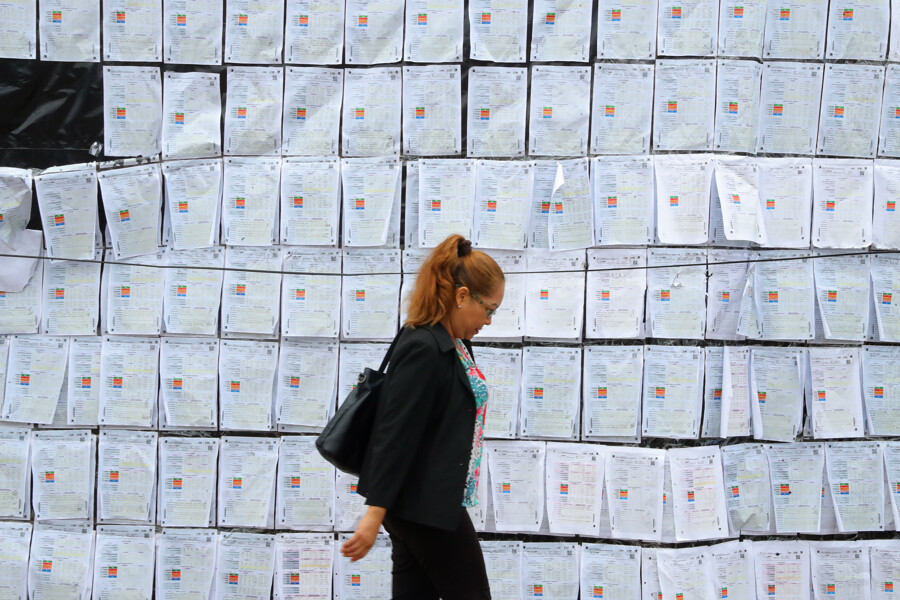
Technical failures and special recount The electoral body ordered a special recount of at least 2,792 ballots that presented inconsistencies, a process that began on December 18, five days later than planned and has been marked by delays and stoppages due to disagreements between party observers and failures in the results transmission systems. The count was also affected by complaints from councilors Ana Paola Hall and Cossette López—CNE president and delegates of the Liberal and National parties—in a body made up of representatives of the main political forces, about 'internal and external difficulties,' some attributed to the third councilor, Marlon Ochoa, of the ruling Libre party.
Fraud allegations and calls for annulment The Libre party denounced a supposed 'fraud' and requested the annulment of the electoral process, a position backed by Nasralla—who was Vice President in Castro's government—alleging supposed manipulations of ballots and the results transmission system. In this atmosphere, the Colombian company ASD, responsible for the Preliminary Results Transmission System (TREP), certified on December 19 its technical role in the process and said it confirmed 'the integrity of the information transmitted,' denying the possibility of fraud during the elections.
Legal deadline for the declaration The recount of legislative and municipal elections is advancing against the clock due to the possibility that the country could be left with a fragmented parliament without absolute majorities, which would force political forces to negotiate pacts to be able to govern. If the CNE does not proclaim the final results by December 30 at the latest, the matter will go to the parliament, whose president, Luis Redondo, of the Libre party, has warned that the Permanent Commission will convene the plenary session to carry out 'the scrutiny of each of the Voting Tables (JRV),' a scenario the opposition describes as unconstitutional. The Permanent Commission, with broad powers, was installed on October 31 by Redondo, who has not called plenary sessions since late August.